
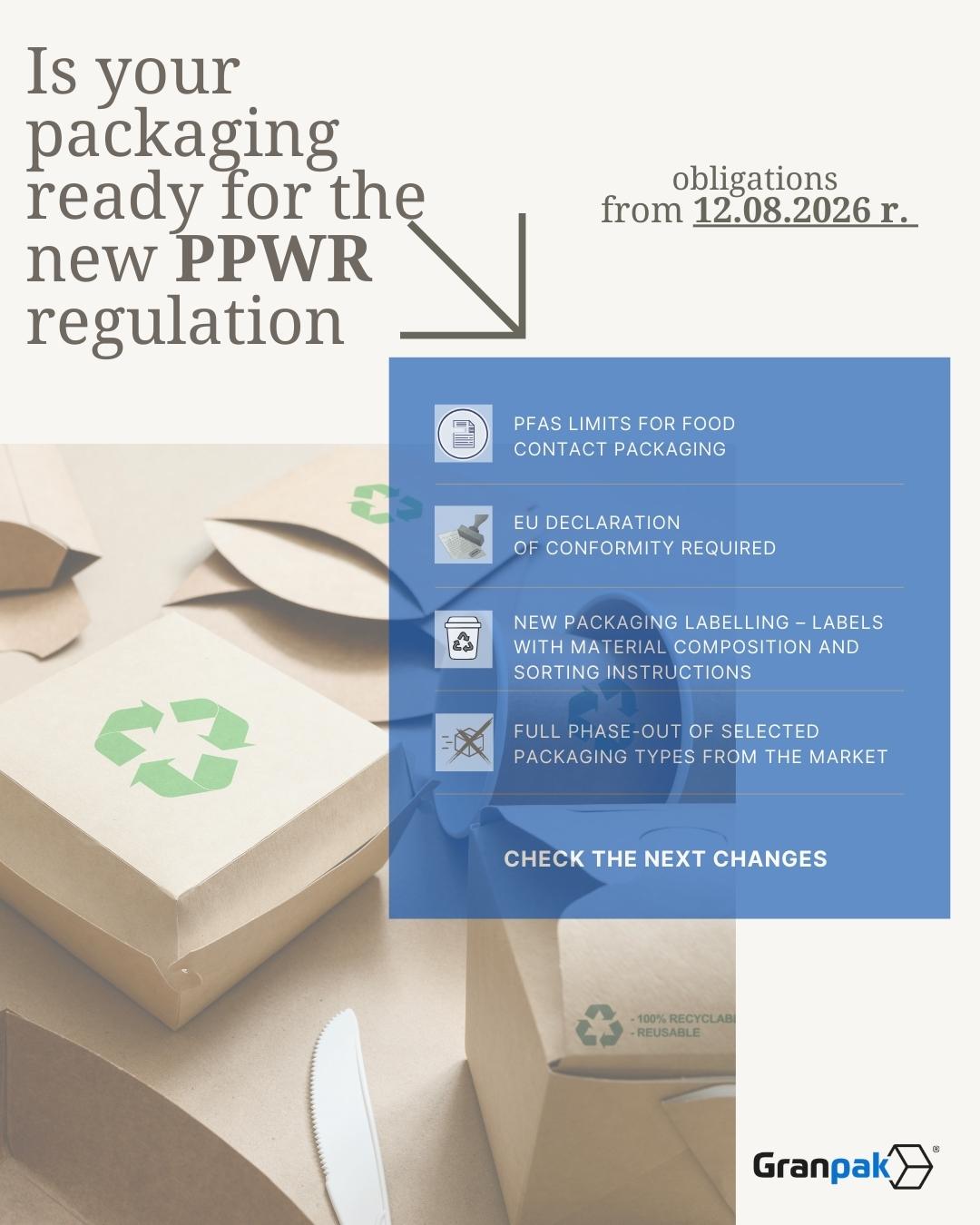
PPWR is no longer something businesses can afford to think about “later.” The first obligations will start to apply from 12 August 2026. This means the packaging market is already changing — and now is the right time for companies to review their packaging, internal processes, and the overall direction of their packaging portfolio.
The new packaging rules will affect not only what materials are used, but also how packaging is designed, documented, and managed across supply chains. For many brands and manufacturers, this is a strategic moment to treat packaging as a competitive advantage — not just a cost.
What does PPWR mean in practice?
The new regulation will bring, among other things:
- Stronger pressure to reduce excess packaging — packaging weight and volume should be kept to the minimum needed, avoiding unnecessary elements.
- The need to design packaging for recyclability — packaging formats and material choices will increasingly be assessed through the lens of sorting and recycling performance.
- Greater focus on compliance, documentation and reporting — reliable data about packaging (materials, weights, specifications, traceability) becomes more important.
- A gradual shift away from some existing packaging solutions towards more sustainable alternatives.
In practice, this often means a portfolio review and answering key questions such as:
- Are our packaging formats optimized — or oversized?
- Does the structure make recycling harder (extra layers, mixed materials, complex components)?
- Do we have the data and documentation needed to demonstrate compliance?
- Do we have a roadmap for portfolio development in the next years?
Why it matters now (not next year)
Many companies wait until changes become mandatory. The challenge is that under regulations like PPWR, last-minute action often results in:
- higher implementation costs,
- less time for testing and adapting packaging to packing lines,
- limited availability of suppliers and materials,
- higher risk of errors in documentation and labelling.
Companies that act earlier will:
- be better prepared for upcoming requirements,
- reduce the risk of costly last-minute implementation,
- gain more flexibility to adapt their offer to changing market and customer expectations.
PPWR is not only a compliance obligation — it’s a signal that packaging strategy and portfolio planning should be updated now.
How to prepare step by step
If you want to approach PPWR practically, start with a simple plan:
1) Audit your current packaging portfolio
List your packaging formats (SKUs / product families) and gather basic data:
- materials and structure,
- weight, dimensions and overall volume,
- add-ons and finishing elements,
- where and how packaging is used (product, logistics, e-commerce).
2) Identify key risks and “excess”
Most common areas to improve include:
- packaging that is too large relative to the product,
- overly complex structures and mixed materials,
- elements that reduce recyclability,
- missing or inconsistent packaging data and documentation.
3) Plan portfolio diversification
PPWR is a strong reason to avoid relying on one packaging type only. Many companies will benefit from building a more flexible packaging portfolio — including more sustainable solutions (such as paper- and cardboard-based options) aligned with regulatory direction and market expectations.
Need support?
If you’re wondering whether PPWR affects your products and packaging — get in touch with us. We can help you review your current solutions and prepare your packaging portfolio for the changes ahead.
Download the PPWR guide
We’ve prepared short, practical guides covering key PPWR rules and timelines: