
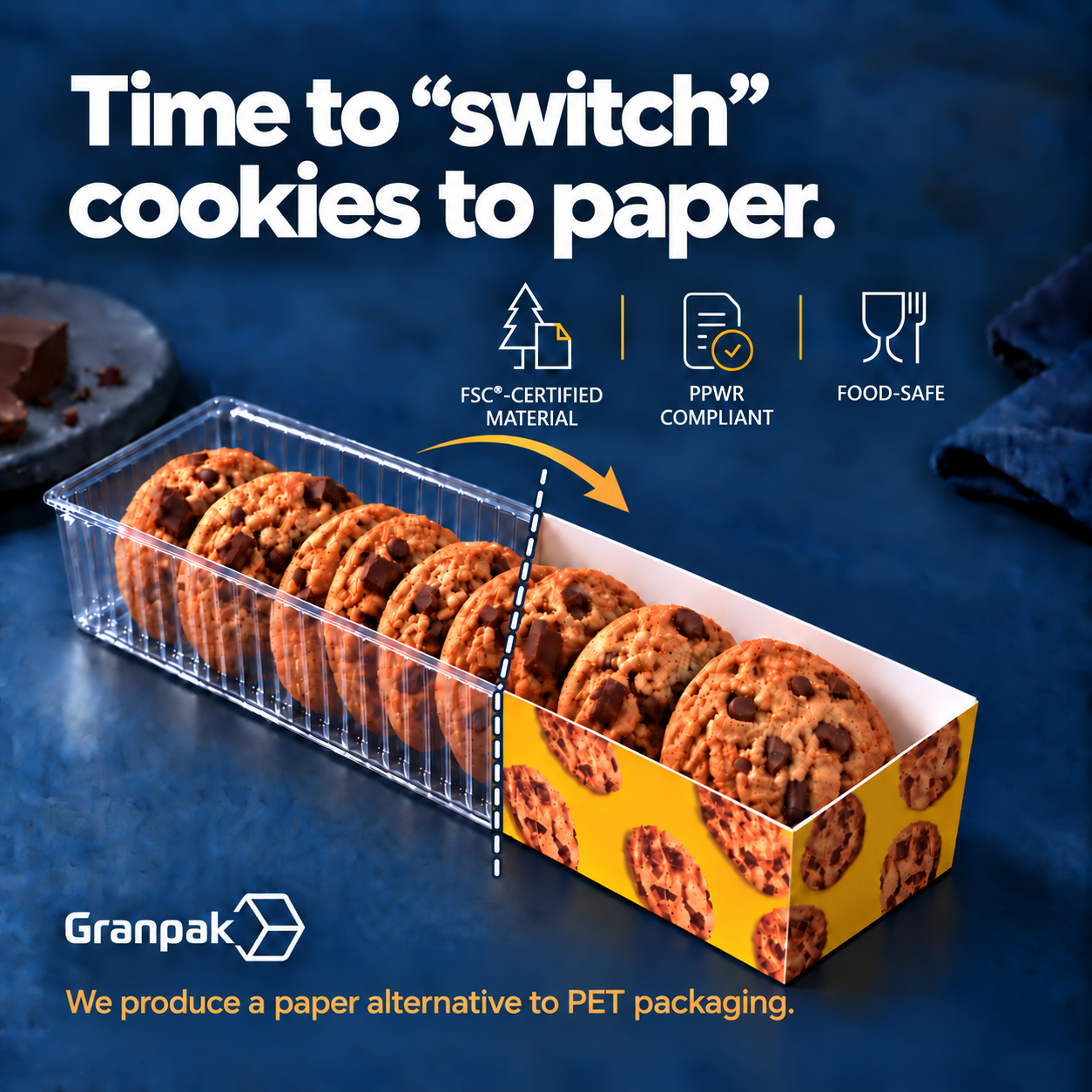
The biscuits and confectionery industry is increasingly reducing the amount of plastic used in packaging. Paperboard trays can provide a practical alternative to rigid PET inserts – provided that they are designed for the specific product and packaging process.
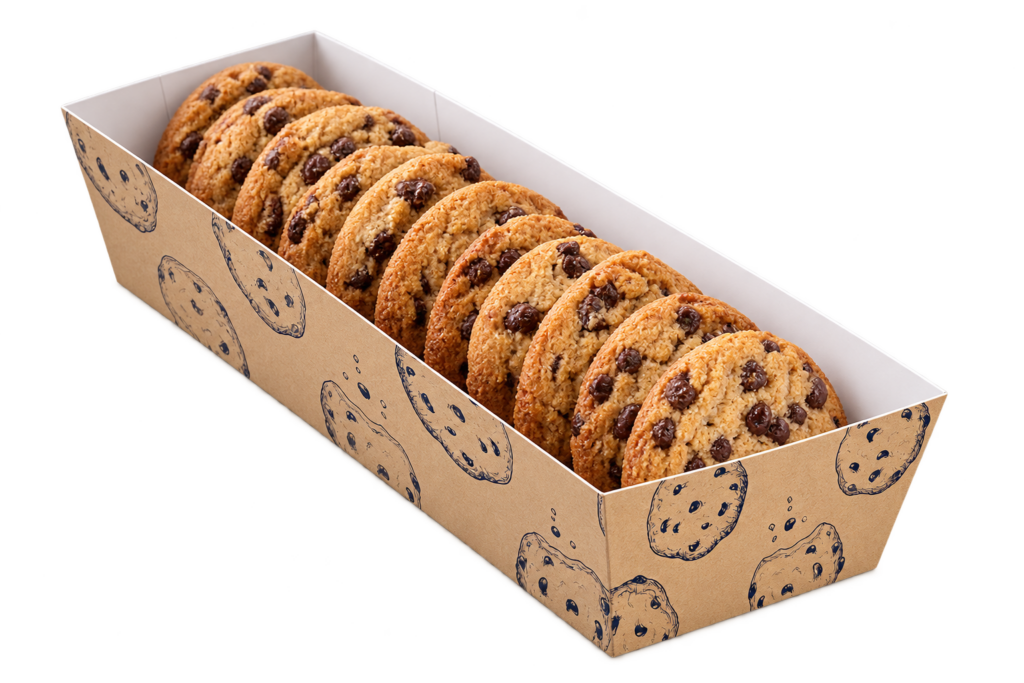
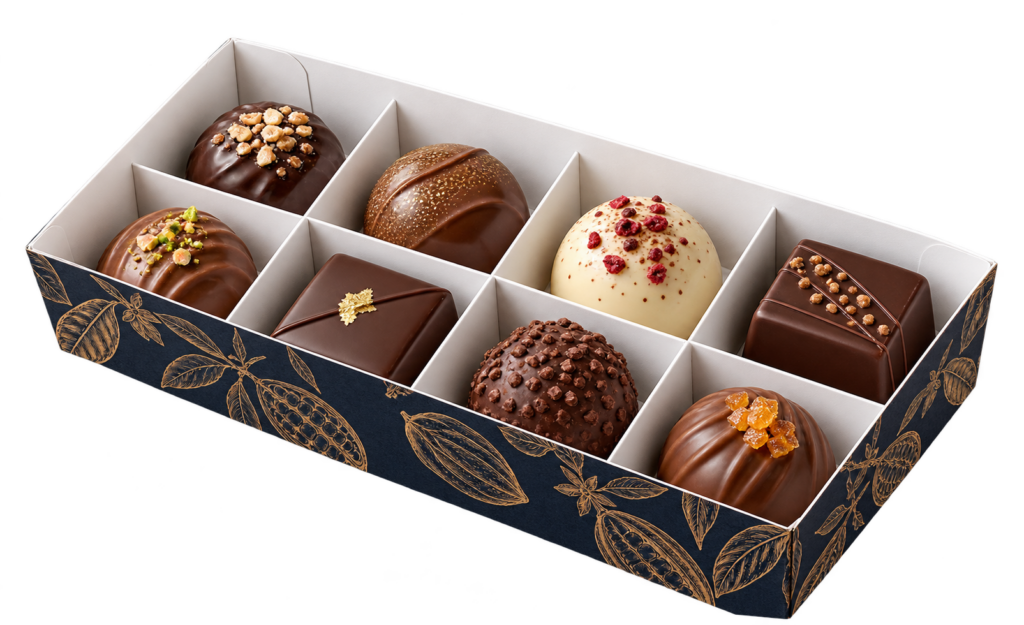
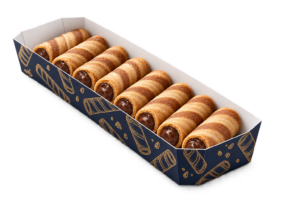
The market is moving towards paper-based alternatives
One of the world’s leading confectionery manufacturers has begun replacing rigid PET trays with paperboard alternatives across more than 115 products sold in over 25 European markets.
According to the company’s public announcement, the change is expected to reduce the use of virgin plastic by approximately 2,200 tonnes per year.
This is an important signal for other manufacturers of biscuits, cookies, wafers, pralines and chocolates. A paperboard tray can significantly reduce the amount of plastic used in packaging, but its successful implementation requires a carefully developed structure.
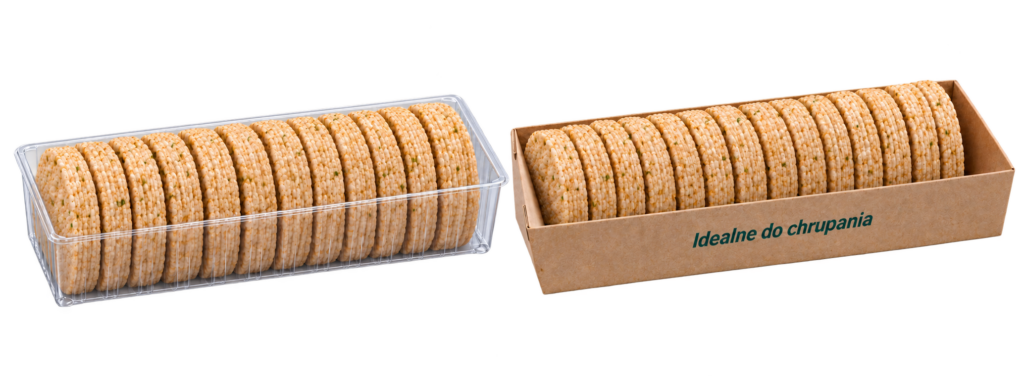
More than a simple material change
Replacing a PET tray is not simply a matter of reproducing the same shape in paperboard. The new structure must protect and stabilise the product, fit inside the outer packaging and perform reliably throughout the packing process.
At Granpak, we design trays for specific products and production conditions. We analyse:
- the shape, dimensions and fragility of the product,
- the arrangement of the product inside the packaging,
- the structure of the outer packaging,
- tray feeding and separation,
- machine gripping points,
- dimensional tolerances and friction,
- the parameters of the automated packing line,
- repeatability in serial production.
As a result, the customer receives a solution developed for a specific product and packaging process rather than a universal tray.
From structural design to fully formed trays
We manage the entire implementation process in one place, including:
- analysis of the existing PET tray and packaging process,
- structural development of the paperboard alternative,
- prototyping,
- material selection,
- testing and optimisation,
- printing and optional finishing,
- die-cutting,
- three-dimensional gluing,
- serial production.
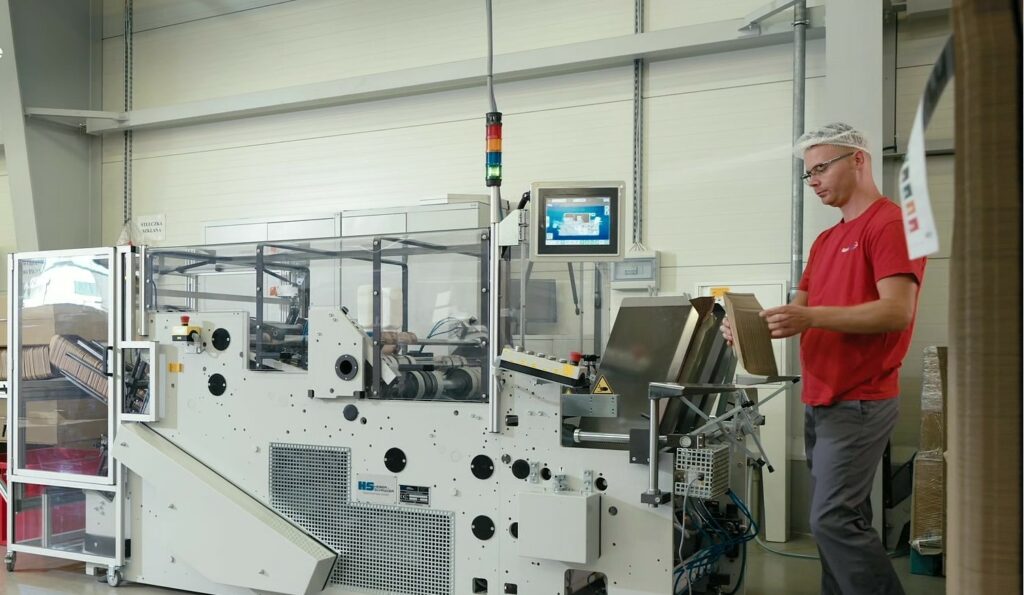
We can supply fully formed trays that are ready to be fed directly into the customer’s packing line. Keeping all production stages at one facility helps maintain quality control, dimensional tolerances and repeatability throughout serial production.
Food packaging safety
Changing the material used in food packaging requires careful consideration of product safety and the relevant documentation.
We work with FSC®-certified materials and develop food packaging solutions with the relevant food-contact requirements in mind. Granpak is also certified to the BRCGS Packaging Materials standard and has been regularly audited against it since 2019.
Paperboard, inks, coatings and adhesives are selected according to the characteristics of the product, the packaging structure and the packing process.
PPWR increases the pressure for change
The PPWR does not introduce a general ban on PET trays used for biscuits. It does, however, place greater emphasis on packaging minimisation, design for recycling and reducing the use of virgin materials.
This does not mean that every paperboard solution will automatically meet future requirements or that every plastic package will need to disappear. Each packaging structure and combination of materials must be assessed individually.
The direction of change is clear, which is why reviewing packaging portfolios and testing paperboard alternatives should begin well in advance.
Start with one product
If your packaging still contains a rigid PET tray, there is no need to change the entire portfolio immediately.
Let us start with one product. We will analyse the existing tray, the packaging process and the parameters of your packing line. We can then develop a paperboard alternative tailored to the product and production process.
Talk to our sales team about a paperboard tray designed for your product.